


Moving With Pets to the Channel Islands
The rules for bringing dogs, cats and other pets from the UK to Jersey or Guernsey, how they can travel, and what to sort out once you arrive.
DJS Moves takes households from the UK mainland across to Jersey and Guernsey, and for many families the biggest worry is not the furniture, it is the dog or the cat. The good news is that moving a pet to the islands is far simpler than taking one abroad. The crossing still needs planning, though, especially in summer and on the longer overnight sailings.
This guide covers the island entry rules, the ways your pet can travel and how to help them settle. For general moving-day advice, see our guide on how to move house with pets.
No pet passport needed from the UK
Dogs, cats and ferrets travelling from Great Britain to Jersey or Guernsey need no pet passport, rabies vaccination or tapeworm treatment. Only certain restricted breeds need a licence.
The entry rules on each island
Both islands treat a pet coming straight from the UK as a domestic journey. The rules only tighten if your pet comes via France or has recently been outside the British Isles.
Bringing a pet toJersey
- No documents, vaccinations or microchip required from the UK
- Travel with any ferry or airline that will carry your pet
- Pets must be at least 8 weeks old to fly
- XL Bully types need a licence, and some other types are banned
- A pet arriving via France needs a microchip, rabies vaccination and health certificate
Bringing a pet toGuernsey
- No notification, documents or vaccinations required from the UK
- Pets must be at least 8 weeks old
- Up to five pets per person on the ferry
- 27 restricted breeds, including American Bully and Cane Corso, need an import licence applied for at least 10 working days ahead
- Pets arriving from France must meet the full pet travel rules or face quarantine
How your pet can travel
By ferry, in your car
The most popular option. To Guernsey, pets can stay in your car for free, and must be muzzled if they leave it. Both ferry companies offer pet cabins or a pet lounge on some sailings, and pets must be booked in advance.
Foot passengers can usually take a pet in a sturdy cage on the car deck for a small fee.
By air, in the hold
Blue Islands carries dogs and cats in the hold on its Southampton and Exeter routes, and Aurigny does the same on its first Southampton to Guernsey flight of the day. easyJet only carries recognised assistance dogs.
Book by phone, and check holiday blackout dates.
With a pet transport company
Specialist pet couriers collect from your UK home and deliver to the island in vehicles fitted for animals. Useful if you are flying, or if your move has to happen in stages.
Ask how they handle the crossing and what happens in hot weather.
Your pet's journey, step by step
- Book your pet onto the crossing when you book your own place
- Check your dog's breed is not on either island's restricted list
- Get a vet check if your pet is old, anxious or unwell
- Practise short trips in the travel crate
- Arrive early for a better spot on the car deck
- Leave two windows partly open and give plenty of water
- In hot weather, choose a cooler overnight sailing
- Avoid sedatives unless your vet advises them
- Update the contact details on your pet's microchip
- Buy a dog licence from your parish
- Register with a local vet
- Keep cats indoors for the first few weeks while they settle
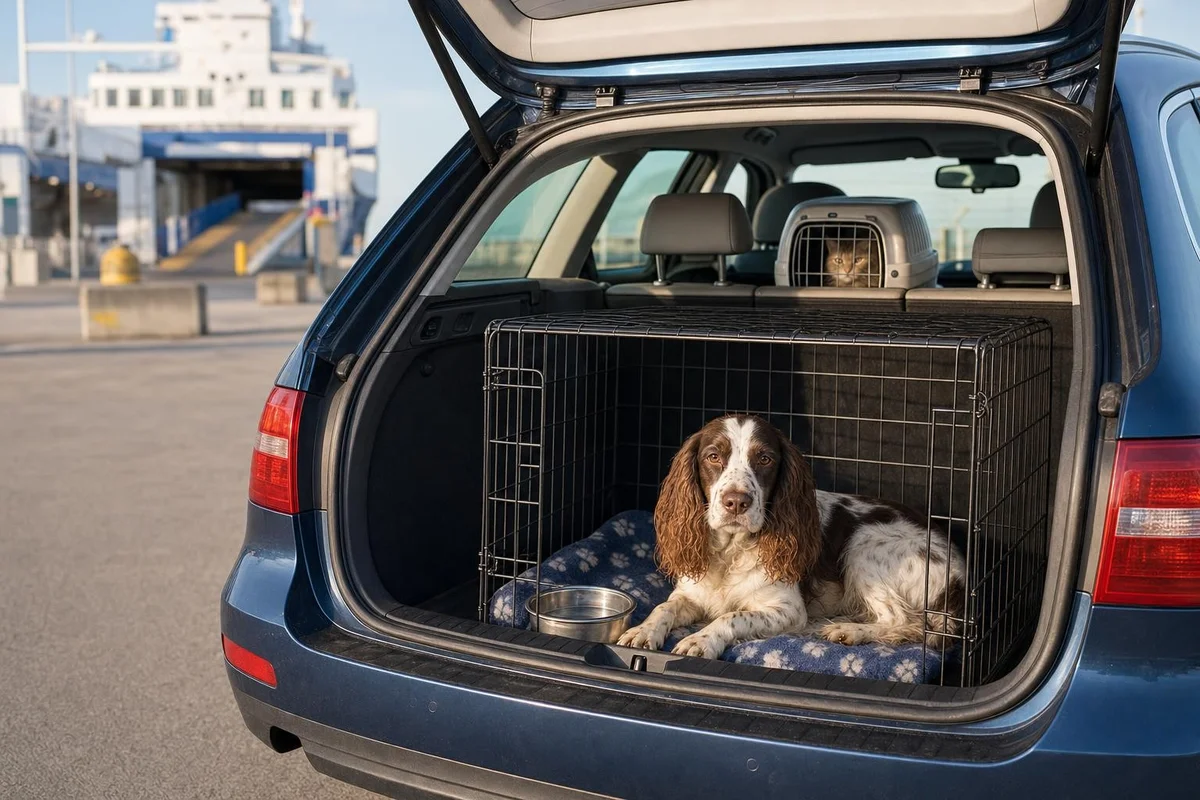
Keeping your pet calm on the crossing
The crossing to Jersey from Portsmouth takes around nine hours, and some sailings to Guernsey run overnight. That is a long time in a car on a ferry deck, so comfort matters more than on a normal move.
Use a crate your pet already knows, with their own bedding. Feed a light meal a few hours before you travel, and walk your dog just before boarding. On moving day itself, keep pets in a quiet room or with a friend while the removal team works, so they are not stressed by open doors and heavy lifting.
Rabbits, birds, reptiles and horses
Other animals can come too, but some need paperwork. Check with the island's animal health team before you book.
| Animal | Jersey | Guernsey |
|---|---|---|
| Rabbits and rodents | No health requirements from the UK, but you must declare them | Covered by a general import licence |
| Pet birds | General licence, with at least 24 hours' notice | Budgies, cockatiels, finches and canaries covered by a general licence |
| Reptiles and amphibians | Reptiles under a general licence, amphibians need a full licence and a test | Individual import licence needed |
| Horses and livestock | Livestock needs a licence, so contact the island vets early | Horses from the UK covered by a general import licence |
Settling in on the island
Dog licence
£10 a year in both islands for dogs over six months, from your parish. In Jersey it rises to £20 if bought after 31 January.
Beach rules
From May to September, Jersey dogs must be on a lead on beaches from 10.30am to 6pm. Guernsey bans dogs from several popular beaches in summer.
Renting with pets
Jersey guidance asks landlords to allow pets unless they have good reason not to. Lodgings and shared homes are often stricter, so ask early.
Clearing up
Fines are steep. Jersey can fine up to £1,000 for leaving dog mess, so keep bags handy.

Leave the heavy lifting to us
While you look after your pets, DJS Moves handles the packing, the sea freight, the customs forms and the unloading at your new island home.
Pet questions we are asked
Does my dog need a pet passport for Jersey or Guernsey?
No. Dogs, cats and ferrets travelling directly from Great Britain need no pet passport, rabies vaccination or tapeworm treatment for either island. The rules only apply if your pet travels via France or the EU.
Can my dog stay in the car on the ferry?
Yes on the Guernsey route, where pets can stay in your car free of charge. On the Jersey route, pets are allowed and must be booked in advance, with pet cabins and a pet lounge on some Portsmouth sailings. Check the options when you book.
Can my cat fly to the Channel Islands?
Yes, in the hold with Blue Islands or Aurigny on selected routes, in an approved carrier. easyJet does not carry pets other than assistance dogs.
Are any dog breeds banned?
Some are restricted. Jersey requires a licence for XL Bully types and bans certain others, while Guernsey lists 27 restricted breeds that need an import licence. Check before you book your crossing.
When do I need a dog licence?
Once you live on the island, every dog over six months needs a licence from your parish. It costs £10 a year in both Jersey and Guernsey.
More on moving to the islands: moving to Jersey, moving to Guernsey and shipping your car to the Channel Islands.