

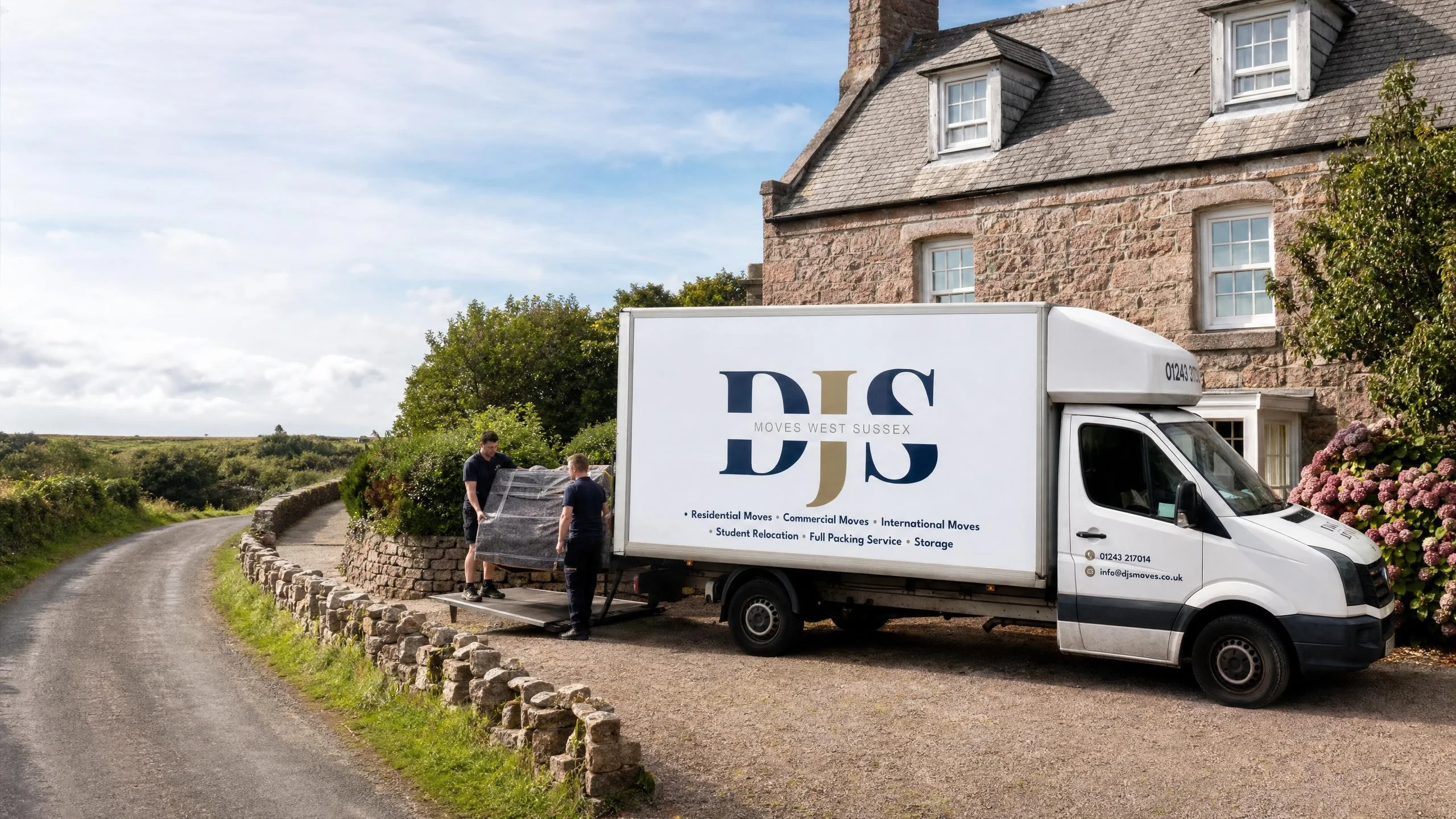
Moving to Jersey from the UK
Jersey is a short sea crossing away, but it runs its own rules on housing, work, tax and healthcare. Here is what to sort out before you go, and what happens when you land.
DJS Moves carries out removals from the UK mainland to Jersey, so we see the same questions come up every time. Jersey is part of the British Isles and uses sterling, so it feels familiar. It is not part of the UK, though. It is a self-governing Crown Dependency with its own laws on who can rent, buy and work, its own tax system and its own health service. The people who settle in smoothly are the ones who understand that before the van is booked.
This guide walks through it in the order you will meet it: your status, finding a home, the paperwork in your first weeks, money and healthcare, your car, and getting your belongings across.
Start with your residential status
Everything in Jersey hangs off your residential and employment status. It decides what you can rent or buy and which jobs you can take. You do not apply for it in advance as such: it follows from how long you have lived on the island, or from an employer's licence.
Standard
Rent one property from the registered sector or live in lodgings. Work in roles open to Standard status. You cannot buy.
Licensed
For essential employees brought in by a licensed employer. You can rent or buy most property, one at a time.
Entitled for Work Only
Work in any job on the island. Housing stays limited to one registered property until you reach Entitled.
Entitled
Buy, sell or rent any property and work anywhere. This is the status island-born residents hold.
Finding somewhere to live
Housing is where Jersey's rules bite hardest, so start looking early and check the status on every listing. On Standard status your options are:
- One property from the registered sector, rented in your own name
- A room in a registered lodging house
- Private lodgings in an owner's home
- Tourist accommodation while you find somewhere
- Buying a home, until you reach Entitled or hold a licence
Prices are well above most of the UK. Rents have eased slightly over the past year, but the registered sector is smaller, so good homes go quickly. Many people rent short term for their first few weeks and look in person.
| Property | Average |
|---|---|
| One-bed flat | £326,000 |
| Two-bed flat | £580,000 |
| Two-bed house | £601,000 |
| Three-bed house | £797,000 |
| Four-bed house | £1,122,000 |
Statistics Jersey, House Price Index, April to June 2026.
Your first weeks in Jersey
Most of the paperwork happens once you are on the island. Work through it in roughly this order.
Get your registration card
Register as a Jersey resident as one of your first jobs. The card costs £88.15 on Standard or Licensed status, and landlords and employers will ask to see it.
Social Security and tax follow automatically
Registering also sets you up with Social Security and Revenue Jersey, so you do not need separate applications.
Open a local bank account
Several familiar UK banks operate in Jersey, but accounts are opened on the island. Your card and proof of address will be needed.
Set up your utilities
Each service has one supplier: Jersey Electricity, Jersey Water and Island Energy for gas. JT and Sure provide mobile and broadband.
Register with a GP
Do this early, even though visits are charged at first. See the healthcare section below.
Sort your car and licence
Register any vehicle you bring straight away, and exchange your UK driving licence at your parish hall.
Bringing your belongings: GST and customs
Jersey has no VAT. It charges Goods and Services Tax at five per cent on goods coming onto the island, worked out on their value plus the cost of freight and insurance. Moving your household is the exception, provided you meet the relief rules.
- You have lived outside Jersey for at least 12 months
- You have owned and used the items at your old home for at least six months
- They are personal belongings, furniture, a car, a caravan, a boat or pets
- You declare them on an importer's declaration, before or on arrival
- Anything bought in the last six months, such as new furniture for the move
- Alcohol, tobacco and e-liquids beyond your allowance
- Commercial vehicles and business stock
- Relieved items you sell, lend or hire out within 12 months
Keep receipts or other proof of when you bought anything valuable. As part of a removal to Jersey, DJS Moves prepares a full inventory and handles the customs declaration, so your goods clear without you having to deal with the port.
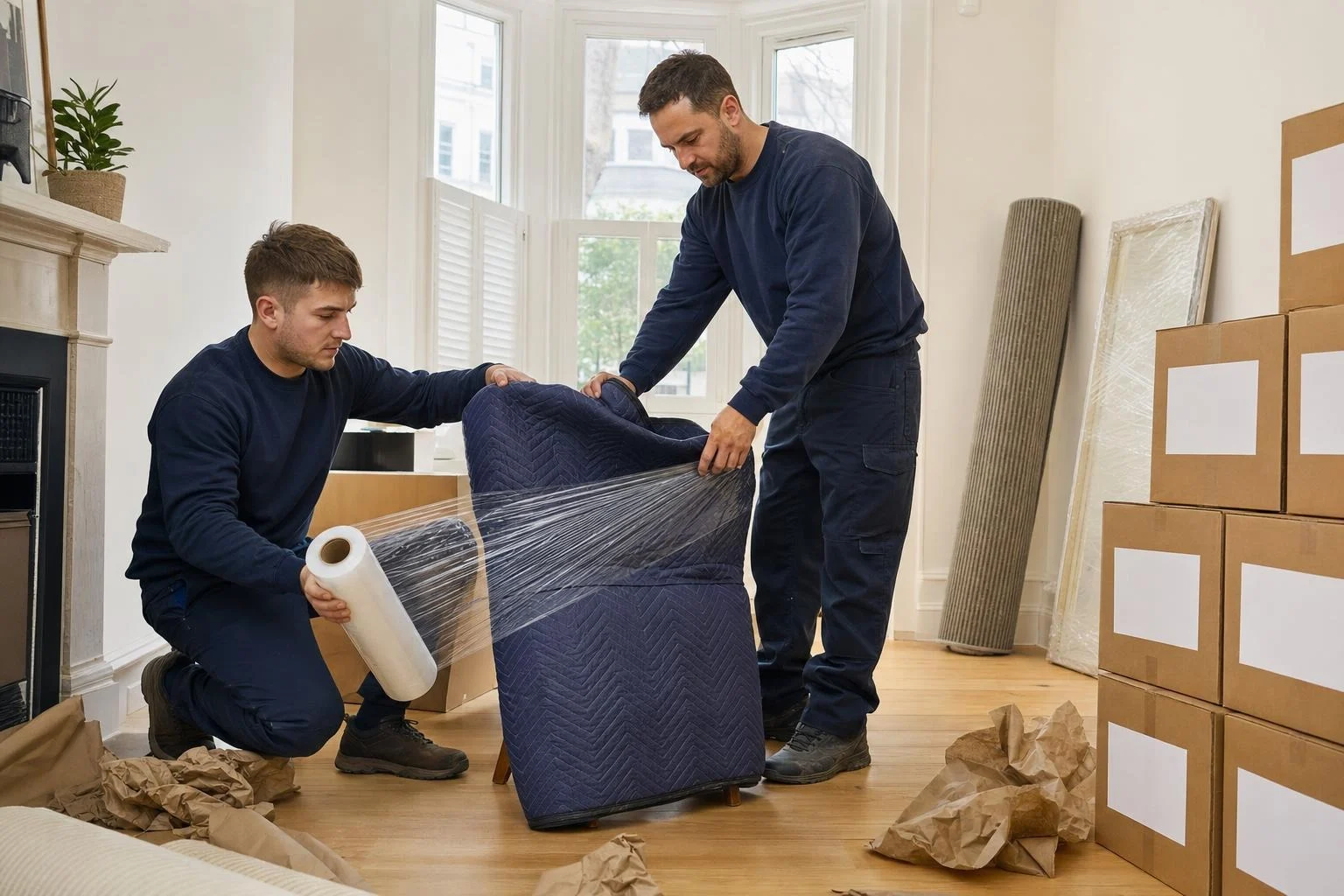
Tax, healthcare and money
The headline tax rate is attractive, but healthcare works very differently from the NHS, and it is the area that catches most new arrivals out.
Income tax
A standard rate of 20%, or 26% on income above the exemption threshold if that works out lower. The 2026 single-person threshold is £21,250. There is no VAT, capital gains tax or inheritance tax.
Social Security
Employees pay 6% on earnings up to the monthly ceiling. Your contributions build your entitlement to health cover and the island pension.
Doctor visits are charged
Expect to pay up to around £45 a visit. For your first six months you pay in full. After that, a health card takes about £50 off each visit and makes prescriptions free.
Living costs are higher than in most of the UK, particularly housing and groceries, although salaries are often higher too and fuel is cheaper. Inflation has settled at a similar level to the UK's, at 2.8% in the year to June 2026.
Your car, your licence and your pets
Driving licence
If you are moving for more than a year, exchange your UK licence for a Jersey one at your parish hall soon after you arrive. It costs £70 and a photo.
Registering a car
Declare the car to customs, then book an inspection and registration at the Driver and Vehicle Standards centre to get Jersey plates. There is no grace period on UK plates. Emissions duty applies on first registration, but relief is available under the same rules as your belongings, and fully electric cars pay nothing.
Cats and dogs
Pets travelling from the UK need no pet passport, vaccinations or quarantine, as long as they entered the UK legally. Our guide on moving house with pets covers keeping them calm on the day.
Getting your belongings to Jersey
You will probably travel by air or on the passenger ferry, which DFDS now runs from Poole and Portsmouth. Your furniture goes separately as freight. That means export packing, a booked sea crossing and a customs declaration at St Helier, which is why an island move is planned differently from a mainland one.
DJS Moves handles it as one job: we survey, pack your home for the crossing, take it to the port, manage the freight and the paperwork, and deliver to your new address in any of Jersey's 12 parishes. Our guide to how removals to the Channel Islands work explains each stage, and our Channel Islands removals page covers Guernsey too.

Planning your move to Jersey?
Tell us what you are moving and when. We will give you a clear quote that covers packing, sea freight, customs and delivery to your new home, so the move is one less thing to worry about.
Common questions
Do I need a visa to move to Jersey from the UK?
No. British citizens can move to Jersey freely. What limits you is residential status, which controls the homes you can live in and the jobs you can take.
Can I buy a house in Jersey when I first move?
Not on Standard status. You can buy once you reach Entitled status after 10 years' residence, or sooner if an employer brings you over on a licence.
Will I pay GST on my furniture?
Not if you qualify for relief: you need to have lived outside Jersey for 12 months and owned the items for at least six. Anything newer is charged at five per cent.
Is healthcare free in Jersey?
Not straight away. GP visits are charged, and new residents get free emergency care only until they have lived on the island for six months (working) or 12 months (not working).
How long does it take to move my belongings to Jersey?
Once packed and collected, door-to-door transit is usually a few days, depending on the sailing schedule. Allow a couple of weeks from survey to delivery for a full house.